Logo

Archive for the ‘Technology & Digital Transformation’ Category

When everything’s changing, is your brand and tech helping you adapt – or holding you back?

If the last few years have taught us anything, it’s that things can change in the blink of an eye.  Markets shift overnight. Supply chains buckle. Policies move faster than rollout.

For businesses in every sector, adaptability has become the ultimate competitive edge.
But many leaders forget to ask themselves a key question:  “Is our brand and technology helping us adapt — or quietly holding us back?

Volatility is the new normal

Economic volatility is now the default setting. From trade tensions to demographic shifts, global disruption affects how organisations operate, invest and grow.

At the same time, customers and partners expect more transparency, speed and digital simplicity than ever. The brands that thrive are those that respond rapidly to change.

That requires two things working in harmony: a strong brand and flexible technology.
If either one lags, a business feels the strain. Outdated systems slow innovation. Disconnected digital platforms make it harder to serve customers consistently. Brands that don’t evolve with their audiences lose the emotional connection.

Your brand is a business tool 

In times of change, your brand isn’t simply how you look. It’s how you behave, how you communicate, and how quickly you can shift gear without losing clarity. A future-ready brand has three characteristics:

Clarity. Defining what you stand for and why, even when everything else changes.

Consistency. Building recognition and trust across markets and channels.

Flexibility. Stretching to new audiences, products or territories without losing its core identity.

When you’re adapting to new markets, products or technologies, your brand acts as a stabilising force — one that keeps customers confident and your teams aligned.

Technology should accelerate change, not complicate it

Behind every strong, agile brand is a digital ecosystem that’s designed for scale. Too often, legacy platforms and fragmented systems make it impossible to move quickly. Data sits in silos, new tools don’t integrate and teams duplicate effort.
The result? Delays, frustration, and missed opportunities. At Speed, we help brands fix that, by bringing clarity and connection to complex digital environments. Our API-first approach ensures every new website, portal or app will grow with you, not against you.

Your tech will flex as your business evolves, with secure integrations, intuitive user experiences and scalable architecture.

The intersection of brand and technology

Where brand and technology work together, you’re more adaptable. Imagine:

  • A refreshed brand identity that communicates progress and purpose, supported by digital tools to deliver the same message globally.
  • A secure website that scales across regions, products and languages – so that growth feels natural, not chaotic.
  • Integrated systems let you adopt data-driven decision-making, giving you the confidence to respond fast when markets shift.

Speed’s creative technology insights delivers a digital and brand foundation to keep you ahead.

Adaptability is the new advantage

You can’t control volatility, but you can prepare to navigate it. When your brand is clear, your technology is scalable, and your teams are aligned around a shared purpose, change becomes less of a threat and more of an opportunity.
Because in a world that won’t stop changing, standing still isn’t an option.


In high-risk sectors, how do you build trust through smart, secure digital experiences?

Trust is everything… but it’s getting harder to earn. In sectors like finance and healthcare, trust isn’t just a nice-to-have – it’s the currency every digital interaction runs on.

When customers hand over financial details or patients share medical data, they do it with the expectation that their information will be handled safely, transparently and with integrity.

Yet risk is everywhere.  Cyberattacks are rising; fraudsters are smarter; legacy systems creak under the weight of modern demands.

From ransomware threats targeting NHS records to sophisticated scams in online banking, the stakes are higher than ever.

For organisations in these high-risk sectors, it’s not if you’ll be targeted – it’s when. So how do you deliver digital experiences that inspire confidence without comprising the user journey?

Secure + seamless = confidence

It’s hard to successfully blend security and usability. We’ve all been on the wrong side of it – endless verification loops, clunky logins and password resets that test even the calmest nerves.

Trust depends on safety AND simplicity.  Smart security design is invisible… strong enough to protect, without creating a barrier.

That’s where user-centred design meets secure architecture. Because whether you’re handling payments, prescriptions or patient records, your design choices send a message about whether to trust your services. 

Here are our top tips for getting the balance right:

1. Reassurance, not paranoia

You don’t build trust by shouting about how secure you are. It’s all in your design. Clean interfaces, predictable navigation and easy-to-read details about how data is stored and used. Users who can see the logic and transparency behind a process feel more confident.

In healthcare, that might mean clear patient portals with step-by-step guidance, and visual reassurance about privacy settings.

In finance, it could be instant confirmation messages or biometric verification – that’s low effort, but high on security. 

The goal is calm competence – with systems that quietly state their reliability.

2. Build from a solid foundation

Cybersecurity isn’t just an IT challenge; it’s a brand issue. When things go wrong, reputational damage can cost more than the breach itself. That’s why we help clients bake security into their digital foundations, not bolt it on later.

We take an API-first approach, meaning every integration, data flow and touchpoint is secure by design. In compliance-heavy sectors, every detail needs to protect the user and the brand.

3. Manage legacy complexity

For many organisations, and especially healthcare, legacy systems are a huge barrier to digital progress.  Slow and fragmented, they’re often incompatible with new tools or security protocols.

But there’s no need to start from scratch: smart integration is the key. By connecting old and new systems safely, you can modernise one step at a time, strengthening data quality and privacy without disrupting daily operations. It’s about creating forward momentum while keeping control.


4. Make transparency your default setting

The main threat of data breaches is that users feel they’ve been left in the dark.  Transparent communication builds resilience. 

Tell users what data you’re collecting, why it matters, and how it benefits them. When transparency becomes part of your brand DNA, compliance turns into confidence.

5. Partner with people who understand the stakes

At Speed, we work with clients in highly regulated industries. We unite tech, creativity and video to build digital tools that drive performance and trust.

In finance and healthcare, your digital experience is more than an interface – it’s how you set your reputation. When every interaction demonstrates safety, clarity and professionalism, users stay loyal.

The takeaway

Trust has to be earned – one secure, seamless interaction at a time. The most successful organisations don’t see cybersecurity as a compliance headache. They see it as a brand advantage – a way to show respect for the people who entrust them with their data.

Whether you’re protecting investments or safeguarding patient records, ask yourself:
Do your digital experiences inspire trust?

How can smarter digital tools help fix broken supply chains?

Shipping delays. Spiralling costs. Disrupted routes. Supply chains are under unprecedented pressure, and the ripple effects are being felt across every sector – from manufacturing and retail to medical and financial services.

In the wake of Brexit, many UK businesses have struggled with more paperwork, more red tape and how to compete on the global stage. But that’s only one part of the story. 

Geopolitical tension, rising energy prices and climate disruption are reshaping the way goods move around the world. Traditional shipping routes are being abandoned in favour of safer, longer alternatives – adding time, cost, and uncertainty at every link in the chain. 

It’s no wonder operations teams are feeling the strain – and this is something we’re hearing from our manufacturing clients across the board.

But where supply chains are breaking down, digital tools are stepping up. With the right tech, businesses can achieve logistics leadership.

Turning data into decisions

At the heart of every supply chain is a huge volume of data. What’s being moved, how it’s moving, where it’s stuck, when it’s due – and what it’s costing. But in many businesses, this information lives in silos, spreadsheets, or legacy systems that don’t talk to one another.

This is where digital transformation comes in. Smarter supply chains start with connected platforms, that keep data in a central place and present it to the right people when they need it. That means faster decisions, earlier interventions, and fewer missed opportunities.

Linking up systems lets teams track everything in one place – from demand to warehouse stock levels, shipping schedules and order fulfilment. Add in real-time alerts, and you’ve suddenly got a proactive, agile operation instead of a reactive one.

Automation where it matters

Manual processes slow things down – so let digital tools pick up the slack. Automating customs documentation, generating product labels, or integrating third-party logistics (3PL) systems are just a few ways to make supply chains faster and more resilient.

It doesn’t just apply to enterprise giants. Increasingly, cloud-based tools are making it easier for mid-sized businesses to plug into efficiencies that were once out of reach.

It’s about knowing what to automate – and when. That’s where strategy and design thinking come in. At Speed, we work with logistics teams to map their real-world workflows and uncover where friction lives. Then we design smarter solutions to eliminate it.

Forecasting in a volatile world

Even the most efficient supply chain can be blindsided by the unexpected. That’s why prediction and scenario planning are becoming mission-critical.

AI-driven tools can analyse historic trends, supplier behaviour and geopolitical risks to help  you test different situations. What happens if a key route closes? What if demand spikes? What if lead times double? Modelling the possibilities – and planning around them – helps you stay ahead of uncertainty.

AI can help optimise routes in real time, identify cost-saving opportunities and even recommend new suppliers based on risk and performance.

Building customer confidence

Supply chain disruption doesn’t just hit internal operations – it also damages customer trust. Late deliveries, stockouts and poor communication have real commercial consequences.

Smarter digital tools help safeguard reputation by giving customers more visibility and clear updates. A self-serve portal, automated notifications or live order tracking all helps maintain confidence – even when things don’t go perfectly.

When customers are informed, they feel in control. That can keep them loyal, even in uncertain times.

Smart supply chains, built for what’s next

There’s no single fix for a fractured supply chain, but there are smarter ways to respond. Data strategy, system integration and user-first design help businesses drive clarity – and outperform the competition.

At Speed, we help organisations take control of their supply chains with creative digital thinking and robust technical execution. Whether it’s building the tools your team needs or redesigning the workflows that slow you down, we’re here to help you move faster, with confidence.

Let’s make your supply chain a strength, not a stress. Get in touch today.

You want to embrace AI, but are your systems, data, and policies ready for it?

AI is no longer the stuff of prediction and futuregazing. It’s here, it’s real, and it’s already reshaping industries – whether it’s maintenance prediction in engineering, diagnostics in healthcare or fraud detection in financial services.

The prime minister is talking about it, investors are asking about it, customers are expecting it and competitors are claiming it. Unsurprisingly, businesses are now feeling the pressure to ‘do something with AI.’ 

But successful AI transformation isn’t just about plugging in a chatbot or putting your employees on a webinar. It demands solid groundwork – and the reality is, most organisations aren’t quite ready.

You can’t build brilliance on unsteady foundations

Before you deploy any AI solution, you need to ask some key questions:

  • Is your data clean, structured and accessible?
  • Can your current systems integrate with new technologies?
  • Do your people understand how to use AI responsibly?
  • Are your security and privacy policies ready for this new direction?
  • Have you considered the ethical implications of automation?

The answer to some of these is bound to be ‘not yet’ – and you’re not alone. But now’s the time to act.

Embracing AI isn’t a sprint, it’s a transformation. It starts with strong digital infrastructure, smart governance and a strategy that balances innovation with real-world application.

The pressure to innovate, fast

Across regulated, data-rich industries like healthcare, finance and manufacturing, digital transformation isn’t just about staying competitive. It’s about keeping pace with shifting customer needs, reducing operational costs and staying compliant within fast-evolving regulation.

AI offers huge potential in all those areas – but it also raises some biq questions.

  • How do you move quickly without compromising compliance?
  • How do you train AI without compromising data privacy?
  • How do you plug in new tools without breaking your legacy architecture?

The answer lies in strategic transformation, not just tech adoption… and that’s where we come in.

Our approach: Tech with purpose

Here at Speed, we help businesses progress from ambition to application. We combine creative problem-solving with technical know-how, so your AI transformation is not just exciting but do-able.

Here’s what we focus on:

1. Digital foundations

AI runs on data. So before anything else, we make sure your systems are capable of gathering high-quality, structured data, centralising and securing it, and integrating with new platforms.  We can then automate some basic tasks and make sure there’s a clear audit trail.
It’s not the glamorous end – but it’s what makes AI work.

2. Governance and responsibility

From GDPR to to AI-specific regulations, staying compliant isn’t optional. We help our clients navigate the complexity by helping with AI usage policies, mapping data flows and risks and making sure everyone understands how it all works together.

3. People, training and trust

AI won’t replace your team. But teams that know how to use AI effectively will outperform those that don’t. We help clients with internal comms, learning tools and change programmes to build trust in AI systems and upskill teams 

Start smart

You don’t need to solve everything at once. In fact, some of the most successful AI transformations start small—with a pilot project, a prototype, a new dashboard or a smarter workflow.

We help our clients find those starting points: high-impact, low-barrier opportunities to build momentum. Then we scale from there, aligning with your commercial strategy and business goals.

We’ll bring in ideas you haven’t considered. Whether it’s turning data into a customer service asset, or turning manual flows into automated ones, we’ll find new advantages for you.

It’s not just about AI

AI is just one piece of the puzzle. Getting ahead means having systems that talk to each other, data that works and a culture that’s open to change.

If that sounds like your business, but you’re not sure where to start, let’s talk.

Navigating the Seas of UI/UX Design

In the ever-evolving digital world, user interfaces (UI) and user experiences (UX) play a pivotal role in shaping the success of digital products. We understand that a seamless blend of UI and UX design is vital for user engagement and retention.

Here are some tips on how to elevate your website with the help of UX and UI:

  1. Understanding UI and UX Design:

UI design revolves around the look and feel of a digital product. It’s the art of creating visually appealing layouts, selecting colour schemes, crafting intuitive navigation, and designing interactive elements that users directly interact with. On the other hand, UX design focuses on the overall experience users have while interacting with a product. It involves understanding user behaviour, conducting research, and crafting seamless, user-centric journeys that fulfil their needs and expectations.

  1. The Synergy Between UI and UX:

UI and UX are not isolated concepts but interconnected components that create a holistic digital experience. A visually appealing UI might grab attention, but without a well-thought-out UX, users can quickly become frustrated and abandon the product. On the flip side, a flawless UX with an uninspiring UI might fail to captivate users, preventing them from fully engaging with the content or features.

  1. Key Principles of Effective UI/UX Design:
  • Design with your target audience in mind. Understand their preferences, pain points, and behaviours to tailor your design choices accordingly.
  • Keep designs simple and straightforward.
  • Maintain a consistent design language throughout your product. Consistency builds familiarity and helps users navigate effortlessly.
  • Ensure your design is accessible to all users. Use proper contrast, alt text for images, and other accessibility features.
  • Design layouts with a clear hierarchy that guides users through the most important elements first. Prioritise content based on user needs.
  • Regularly test your designs with real users to identify pain points and areas for improvement. Iterative testing leads to a more refined user experience.
  • With mobile devices dominating digital usage, ensure your designs are responsive and work seamlessly across various screen sizes.

By combining artistic UI elements with user centric UX strategies, you can create seamless, visually captivating, and intuitive interfaces that drive engagement and leave lasting impressions.

Contact us today to embark on a journey towards delivering exceptional digital experiences that stand out in today’s competitive landscape.

Optimising Website Performance: Expert Tips and Techniques from a Digital Agency

In today’s fast-paced digital landscape, where users demand instant gratification and search engines favour high-performing websites, optimising your website’s performance has become a critical factor for success. As an agency, we understand the importance of delivering seamless user experiences while achieving your business goals.

Here are some invaluable tips and techniques to help your website thrive in the competitive online realm:

  1. Prioritise Page Speed:

Page speed isn’t just a crucial metric for user satisfaction; it also impacts your website’s search engine ranking. Slow-loading pages lead to higher bounce rates and lower conversion rates. Compress images, minify CSS and JavaScript files, and leverage browser caching to significantly improve loading times.

  1. Optimise Images:

Images are often the heaviest elements on a webpage. Use the right image formats (JPEG for photographs, PNG for graphics) and employ image compression tools to strike a balance between quality and file size. Consider using responsive images to ensure the appropriate image size is delivered to different devices.

  1. Streamline Code and Scripts:

Clean, well-organised code not only makes your website more maintainable but also improves performance. Remove unnecessary characters, comments, and whitespace from your code. Implement asynchronous loading for scripts whenever possible to prevent blocking page rendering.

  1. Embrace Mobile-First Design:

With mobile devices driving a significant portion of web traffic, adopting a mobile-first design approach is essential. Design your website to be responsive and mobile-friendly from the ground up. This approach ensures that your site performs well on a variety of screen sizes and devices.

  1. Content Delivery Strategy:

Consider the order in which your content loads. Critical content, such as text and primary images, should load first, allowing users to start engaging with your website quickly. Non-essential content can load later, enhancing the perceived speed of your site.

  1. Regular Updates and Maintenance:

Websites are dynamic entities, and their performance can degrade over time due to software updates, changes in content, and increased traffic. Regularly update your CMS, plugins, and themes to ensure optimal performance. Remove or replace outdated elements that might be dragging down your site’s speed.

In the digital age, a well-optimised website is your digital storefront – the first point of contact for potential customers. By implementing these tips and techniques, you’ll not only provide exceptional user experiences but also enhance your website’s search engine visibility and overall success.

Contact us today to elevate your online presence.

Impact Of Technology On The Healthcare Sector

It’s fascinating to be a part of a big shift within an industry, and as an established healthcare tech and creative agency we have been involved in many innovations for medical and health-focused brands. The ever-growing complexity of treatments and an ageing population is constantly driving demand for health services. The industry is having to find effective new ways to rise to the challenge – so what are the key trends?

Healthcare is a huge industry and growing globally every day. There are three core area where technology is shaping the sector:

Better quality care and efficiency

Health technology makes things easier for both patients and practitioners. Self-service technology is available for most GPs and other providers today, allowing patients to book appointments, check in on arrival and updated their personal details. This saves significant time for both staff and patients and allows staff to focus on more complex work. 

The NHS app was launched in December 2018 and is an ambitious innovation. It now has over 22 million users who can access health advice, book appointments, order repeat prescriptions and prove their Covid-19 vaccination status.

Treatment innovations

Data and technology is integral in delivering ground-breaking innovations. The speed of data analytics and the use of AI in identifying patterns and trends is vastly enhancing the understanding of health conditions.

Technology is developing incredible new ideas – such as personalised 3D models of the heart to improve operation success, development of robotic prosthetics and programming AI to read every medical journal ever published.

Access to information

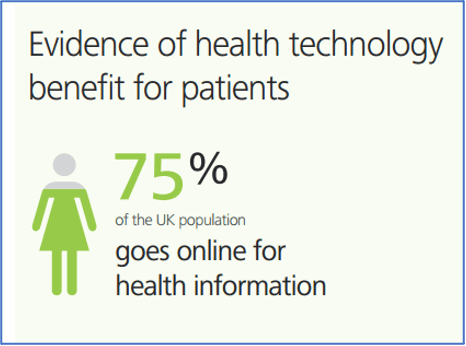
Digital communication can bridge the gap between consumers and clinicians via websites and health apps. More than 75% of the UK population now seek health information online.

Four Ways To Generate More Leads On Your Website

85% of B2B marketers say lead generation is their most important content marketing goal[1].  Is your website working hard enough to get you new customers?

Here are four ways to step up your lead generation…

1. Move your Call to Action

The placement of your CTA has a big impact on conversion rates.

Eye-tracking studies find that people on a webpage start by looking in the upper left-hand corner of the page, and move their eyes in an F-shaped pattern as shown below:

Source: Nielsen Norman Group

That’s why good websites have their logo on the top left of the page and the CTA on the top right. It maps with natural eye flow so that the most important things are most prominent to the user.

If your call to action, whether it’s ‘Contact Us’, ‘Buy now’, ‘Sign up’ or something else, make sure it’s on the top right of your page.

2. Keep it simple

Don’t attempt to explain everything about your company, solution or product on your home page. Human attention spans are very short and lots of text is overwhelming.

Keep your landing pages simple and clear.

Our website design for Energetik is a good example: clean, clear, with a single message on the home page: https://energetik.london/

3. Blog often

If you don’t have a business blog or aren’t regularly updating it, you’re missing out on traffic and new leads.

Every time you write a post is written, your page is indexed by search engines, moving it up the rankings and reaching more people. Plus, share the latest posts on your social channels to drive people to your site.

4. Shout about your success

Add testimonials and case studies to your website to showcase satisfied customers. Short, snappy quotes from happy clients will quickly build trust. Longer case studies give real-life examples of how you work and what customers can expect – all helping to persuade them to choose you.

Every business has their own specific lead generation needs – so if this is an area you want to improve, get in touch. We have lots of lead generating tricks up our sleeve!

Why Speed Agency Loves WordPress

Launched in 2003, WordPress is one of the world’s most used content management systems (CMS) powering 32.5% of ALL websites. It’s a firm favourite with Speed for website development and design. Find out why WordPress is our go-to choice for website design, user experience (UX), SEO and bespoke development.

Although WordPress is not suited to every single web design project, this Content Management System (CMS) is great for professional web designers and users alike. Here’s why…

Custom pages

WordPress is an open-source CMS, which means it’s frequently updated by developers. WordPress receives thousands of updates and plugins through customisable coding – so the possibilities are endless. That saves our developers time, as we don’t need to deliver bespoke coding from scratch. It also means we can meet the needs of many different clients and their customers.

Most clients want a website that’s unique and different from their competitors. Here at Speed we’re brilliant at both bespoke coding and customising off-the-shelf solutions. Our knowledge of WordPress together with skills in HTML, CSS, Javascript and PHP allows us to tweak and extend pages to really push the boundaries.

That way, we can vary web structure layout and personalisation to meet and exceed every client’s expectations.

Fast Timeframes

Many clients want their websites up and running super quick. Building a website from scratch requires heavy planning from website design, deciding on content, navigation, menu layout, images, and much more. That’s time-consuming, so costs can quickly stack up.

WordPress resolves those challenges and allows us to create a great-looking site quickly and cost-effectively.

Control

WordPress allows fantastic reliability and management from an easy-to-use back-end.  It gives clients amazing control so they can make changes in-house.

WordPress has a simple layout, and once your site it built it’s very easy to add or edit content. You can add pages that look great without needing to get your agency to help.

SEO

WordPress is search engine friendly. It offers built in optimisation tools and third-party plugins like Yoast to help you optimise your content, including page titles, descriptions and keywords.

When developing a client’s website, we make it as SEO friendly as possible to make it easy for your target audience to find you.

Our WordPress successes

  • Vivacity – The Great War Peterborough

We used WordPress to create a website for Vivacity, the cultural service in Peterborough, bringing to life the city’s role in World War I. Thousands of soldiers, signed a guestbook as they passed through Peterborough en-route to the front line. Our role was to create digital version of the guestbook showcasing the servicemen’s entries page by page.

The content of the book was digitised by a group of volunteers. We used JavaScript to create a page-turning function. HTML and technical bespoke coding created a virtual book with clickable areas on each page.

Our client loved the site and it attracted national attention as part of World War I centenary celebrations.

  • Teach Peterborough

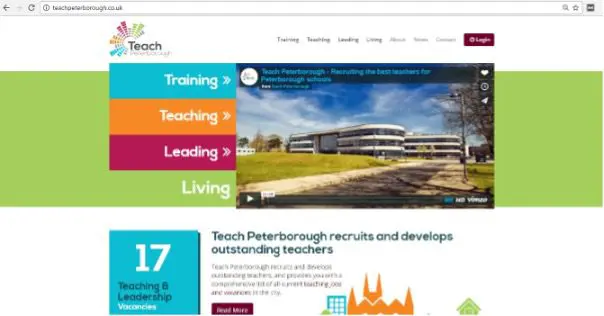
Our client needed a website that promoted Peterborough to teachers as a great place to live and develop their careers. Using WordPress, Speed created a digitally designed website that centred on recruitment.

Speed’s in-depth knowledge of WordPress meant that we were able to make Teach Peterborough a very user friendly website, that enables potential applicants to find the placement they wanted, quickly and easily. Applying for a jobs is generally a long and complicated process, but we made it easier. With Teach Peterborough candidates fill in a form once then submit their details to multiple vacancies.

The website acts as a portal which brings everything teachers need together in one place. It successfully drew more teachers into the area. Teach Peterborough also won regional campaign of the year at the CIPR awards.