Logo

Archive for the ‘Uncategorized’ Category

Branding With A Smile – Could Your Brand Benefit From Humour Or Satire?

Using humour and satire in branding can be a powerful way for companies to differentiate themselves and engage with their audience. When used effectively, humour and satire can help to create a memorable brand image and generate positive associations with a company’s products or services.

There are a number of benefits to using humour and satire in branding, including:

1.  Increased attention: Humorous and satirical ads can grab the attention of consumers and stand out in a crowded marketplace.

2. Improved brand experience: Humorous ads can create a more positive and enjoyable brand experience for consumers, which can lead to increased brand loyalty.

3.  Engagement on social media: By incorporating humour and satire into their social media presence, companies can create a more engaging and interactive brand experience for their followers.

4.  Building relationships with customers: By using humour and satire in branding, companies can build relationships with customers and create a more positive brand image.

5.  Increased brand visibility: Using humour and satire in branding can help to increase a company’s visibility and reach a larger audience. This is especially true on social media, where humorous and satirical posts are often shared and spread widely.

6.  Greater credibility: Humour and satire can also be a way for companies to build credibility with their audience. By showing that they are able to approach sensitive topics with humour and wit, companies can demonstrate their intelligence and sophistication.

7.  Improved customer loyalty: By creating a more enjoyable and memorable brand experience for customers through humour and satire, companies can improve customer loyalty and increase the likelihood that customers will continue to do business with them in the future.  

It is important for companies to be careful when using humour and satire in branding, as it can be a sensitive topic and not everyone may find the same things funny. However, when used effectively, humour and satire can be a powerful tool for companies looking to differentiate themselves and engage with their audience.

Overall, using humour and satire in branding can be a powerful way for companies to differentiate themselves and engage with their audience. By creating humorous and satirical marketing materials and incorporating humour into their social media presence, companies can create a more memorable and positive brand experience for consumers and enjoy the many benefits of using humour and satire in branding.

Top Class Internal Communications To Build Employee Engagement

Effective internal communications are essential for the smooth operation and success of any business, as it helps to ensure that all employees are on the same page and working towards common goals.

One of the key benefits of effective internal communications is that it promotes transparency and trust within a company. When employees have access to accurate and timely information about the company’s operations and decisions, they are more likely to feel invested in the success of the business and to be motivated to work towards common goals.


Clarity is key

Effective internal communications can also help to reduce confusion and misunderstandings within a company. By clearly communicating expectations and guidelines to employees, a company can help to ensure that everyone is on the same page and working towards the same objectives. This can help to prevent miscommunications and mistakes, and ultimately lead to a more efficient and productive workplace.

Internal communications can also help to build a sense of community and teamwork within a company. By fostering open and honest communication and encouraging employees to share ideas and feedback, a company can create a positive and collaborative working environment. This can lead to increased job satisfaction and employee retention, as well as improved morale and productivity.

Reach out to your people

There are a variety of ways in which companies can improve their internal communications. Some common methods include regular team meetings, email updates, newsletters, and employee surveys. It is important for companies to find the methods that work best for their organization and to be consistent in their communication efforts.

In conclusion, effective internal communications are essential for the success of any business. By promoting transparency, reducing confusion, and fostering a sense of community within the company, internal communications can help to ensure that all employees are working towards common goals and that the business is operating efficiently and effectively.

Rebranding In A Digital World – The Secret To Success

Rebranding in the 21st century has become increasingly digital, as companies seek to update their brand image and reach a wider audience online. In the past, rebranding may have primarily involved updating a company’s physical marketing materials, such as its business cards and promotional materials. However, in the 21st century, the digital landscape has created new opportunities and challenges for companies seeking to rebrand.

Digital first

One major change in rebranding in the 21st century has been the increased importance of the online presence. In the past, a company’s website may have been a secondary consideration, with the focus being on more traditional marketing channels such as television, radio, and print ads. However, in the 21st century, a company’s website is often the first point of contact for consumers, and it is therefore crucial for a company’s website to accurately reflect its brand image.

Another change in rebranding in the 21st century has been the rise of social media. With platforms such as Facebook, Twitter, and Instagram, companies can now interact directly with their customers and build relationships with them in a more personal way. This has given companies greater control over their brand image and has made it easier for them to respond to customer feedback and address any issues that may arise.

Reaching out

In addition to these changes, the 21st century has also seen the emergence of new rebranding techniques, such as influencer marketing. This involves partnering with influential individuals or groups on social media to promote a company’s products or services. This can be an effective way for companies to reach a larger audience and build credibility, as influencers often have a loyal following of dedicated fans.

Overall, rebranding in the 21st century has become increasingly digital, with the rise of the internet and social media playing a major role. Companies are now able to update their online presence, interact directly with their customers through social media, and use new techniques such as influencer marketing to promote their brand. As technology continues to evolve, it is likely that rebranding will continue to change and adapt in the coming years.

Building A Successful Brand In 2023

In the 21st century, branding has become increasingly important as companies compete to differentiate themselves in a digital landscape. The internet and social media have provided new channels for companies to communicate their brand to consumers, and as a result, branding has undergone significant changes in recent years.

Let’s get personal

One major change in branding has been the shift towards personalisation and customisation. With the proliferation of data, companies are able to tailor their branding efforts to individual consumers, using targeted ads and personalised recommendations on social media and e-commerce sites. This allows companies to build stronger relationships with their customers and create a more personalised brand experience.

Another change in branding has been the increased focus on customer experience. In the 21st century, companies are recognising the importance of the overall customer experience in building a strong brand. This includes everything from the design of a company’s website and social media presence to the way customer service is handled. By prioritising the customer experience, companies can create a positive brand image and foster customer loyalty.

The social side of branding

The rise of social media has also had a major impact on branding. Companies can now interact directly with their customers through platforms such as Facebook, Twitter, and Instagram, allowing them to build relationships and engage with their audience in a more personal way. This has given companies greater control over their brand image and has made it easier for them to respond to customer feedback and address any issues that may arise.

In addition to these changes, the 21st century has also seen the emergence of new branding techniques, such as influencer marketing. This involves partnering with influential individuals or groups on social media to promote a company’s products or services. This can be an effective way for companies to reach a larger audience and build credibility, as influencers often have a loyal following of dedicated fans.

Multi-channel branding is the key

Overall, branding has undergone significant changes in the 21st century, with the rise of the internet and social media playing a major role. Companies are now able to personalise their branding efforts, focus on the customer experience, and interact directly with their audience through social media. As technology continues to evolve, it is likely that branding will continue to change and adapt in the coming years.

Making finance more social

5 Reasons You Should Use Animated Videos

Animated video marketing has exploded as marketers look for more imaginative ways to grab their audience’s attention. It’s a low cost, high impact marketing tool that’s too good to miss.

Here are 5 reasons why YOU should use animated videos in your marketing mix.

  1. To tell a story

Instead of wading through lots of text, 69% of web users prefer video to learn about a product or service. Users can quickly absorb this information in a matter of seconds.

Our Creative Director, David Dews says:

 “Video lets us present complex information with something that’s easily digestible. Pure text and images on your website are no match for an animated infographic. You can be really versatile with video. It’s a persuasive tool in educating consumers about what you offer”.

  • To engage with potential customers

Research suggests that audiences are ten times more likely to engage with video content than text-only blogs, especially on social media.

Videos provide more interesting content that’s easily shareable with the click of a button. If you want people to notice and engage with your brand, animated videos are a low-cost, high-achieving option to get your message across.

  • To nail your SEO

Adding video to your website can drastically improve your SEO efforts and drive more people to your website.

When Google shows a video thumbnail next to a search result, users are more likely to click that listing. The thumbnail makes the result a “rich snippet” which have higher click-through rates.

  • To drive conversions

74% of users who watch an explainer video to learn more about a product or service subsequently buy it
Source: Mollica Film Co

Video can be a great conversion tool when educating customers about your product and services. It’s a real boost to their decision-making process.

Explaining in a few seconds to why they should purchase your products or services can be all they need to persuade them to buy.

  • To learn

Animated video is much more measurable than other forms of marketing. Understanding who’s watching your content and what they do next is extremely valuable.

It’s also a way to learn more about what works best, what your customers are interested in and what to focus on next.

We create all kinds of video animations to meet any requirement. Take a look at some of our recent projects and get in touch with the team to discuss what you need.

Four Ways To Generate More Leads On Your Website

85% of B2B marketers say lead generation is their most important content marketing goal[1].  Is your website working hard enough to get you new customers?

Here are four ways to step up your lead generation…

1. Move your Call to Action

The placement of your CTA has a big impact on conversion rates.

Eye-tracking studies find that people on a webpage start by looking in the upper left-hand corner of the page, and move their eyes in an F-shaped pattern as shown below:

Source: Nielsen Norman Group

That’s why good websites have their logo on the top left of the page and the CTA on the top right. It maps with natural eye flow so that the most important things are most prominent to the user.

If your call to action, whether it’s ‘Contact Us’, ‘Buy now’, ‘Sign up’ or something else, make sure it’s on the top right of your page.

2. Keep it simple

Don’t attempt to explain everything about your company, solution or product on your home page. Human attention spans are very short and lots of text is overwhelming.

Keep your landing pages simple and clear.

Our website design for Energetik is a good example: clean, clear, with a single message on the home page: https://energetik.london/

3. Blog often

If you don’t have a business blog or aren’t regularly updating it, you’re missing out on traffic and new leads.

Every time you write a post is written, your page is indexed by search engines, moving it up the rankings and reaching more people. Plus, share the latest posts on your social channels to drive people to your site.

4. Shout about your success

Add testimonials and case studies to your website to showcase satisfied customers. Short, snappy quotes from happy clients will quickly build trust. Longer case studies give real-life examples of how you work and what customers can expect – all helping to persuade them to choose you.

Every business has their own specific lead generation needs – so if this is an area you want to improve, get in touch. We have lots of lead generating tricks up our sleeve!

The Foundation Of Typography And Marketing

What does your typography say about your brand? Your typeface is a key element in all kinds of marketing – your brand identity, design & print, digital marketing and web & app development. It subtly conveys all kinds of things about your brand personality. But why is that, and what do you need to consider?

People often talk about “font” and “typeface” as if they’re the same thing. They’re certainly related, but there are technical differences between the two. 

Typeface

A typeface is the design of letters and numbers, looking at the weight and shape of letters and numbers. Typeface is sometimes described as a ‘font family’, giving an overall style to lettering. There can be many different fonts within a typeface.

Serif or Sans Serif is a key typeface choice and should be one of the first considerations for your design. Choosing between the two will narrow down the style you want.

Sans-Serif

Serif

A serif typeface is more decorative and has tips at the end of each letter.

There is big debate around which style is the best to use for print or online. Generally, though,  serif typefaces are easier to read in lengthy copy.  Sans serif typefaces feel more modern and casual, and are popular blogs and other web content.

Font

A font on the other hand, is a set of letters in a specific style and size that they are designed in. For example, “Arial” is a typeface, but Arial, size 10, italics, is a font. Basically, this tells a computer and printer how to display the typeface.

It’s easy to see how the two can be confused – but it helps to understand the difference. So how does this fit with branding?

Branding and Typography

Typography forms part of your branding and plays an important role in your brand identity. Getting your font right could mean the difference between having an audience engage with your message, or miss what’s being communicated. So does a bad font change perception?

As an example, let’s look at Gap. The brand underwent a major rebrand in 2010. The original logo showed the word “GAP” in capital letters inside a dark blue square. The new logo resized the blue square and the typeface changed from Serif to Sans, as below.

Before

After

The redesign attracted all sorts of comments, mostly negative. The main criticism was the choice of typeface used – Helvetica was perceived as an old typeface, popular back in the 1960s and 70s, and too big a shift from the previous design. To manage so much complaint, Gap reverted to their original logo.

The new look wasn’t perceived to represent GAP as a fashion brand – many people said it looked like the logo for an IT company or management consultancy.

Ask the experts

When designing your brand, we always give typography major consideration. There’s no doubt that typeface plays a massive role in establishing your brand, creating personality and highlighting your central message. We’ll always test a few options with you to find the typeface that resonates the best.

Why Speed Agency Loves WordPress

Launched in 2003, WordPress is one of the world’s most used content management systems (CMS) powering 32.5% of ALL websites. It’s a firm favourite with Speed for website development and design. Find out why WordPress is our go-to choice for website design, user experience (UX), SEO and bespoke development.

Although WordPress is not suited to every single web design project, this Content Management System (CMS) is great for professional web designers and users alike. Here’s why…

Custom pages

WordPress is an open-source CMS, which means it’s frequently updated by developers. WordPress receives thousands of updates and plugins through customisable coding – so the possibilities are endless. That saves our developers time, as we don’t need to deliver bespoke coding from scratch. It also means we can meet the needs of many different clients and their customers.

Most clients want a website that’s unique and different from their competitors. Here at Speed we’re brilliant at both bespoke coding and customising off-the-shelf solutions. Our knowledge of WordPress together with skills in HTML, CSS, Javascript and PHP allows us to tweak and extend pages to really push the boundaries.

That way, we can vary web structure layout and personalisation to meet and exceed every client’s expectations.

Fast Timeframes

Many clients want their websites up and running super quick. Building a website from scratch requires heavy planning from website design, deciding on content, navigation, menu layout, images, and much more. That’s time-consuming, so costs can quickly stack up.

WordPress resolves those challenges and allows us to create a great-looking site quickly and cost-effectively.

Control

WordPress allows fantastic reliability and management from an easy-to-use back-end.  It gives clients amazing control so they can make changes in-house.

WordPress has a simple layout, and once your site it built it’s very easy to add or edit content. You can add pages that look great without needing to get your agency to help.

SEO

WordPress is search engine friendly. It offers built in optimisation tools and third-party plugins like Yoast to help you optimise your content, including page titles, descriptions and keywords.

When developing a client’s website, we make it as SEO friendly as possible to make it easy for your target audience to find you.

Our WordPress successes

  • Vivacity – The Great War Peterborough

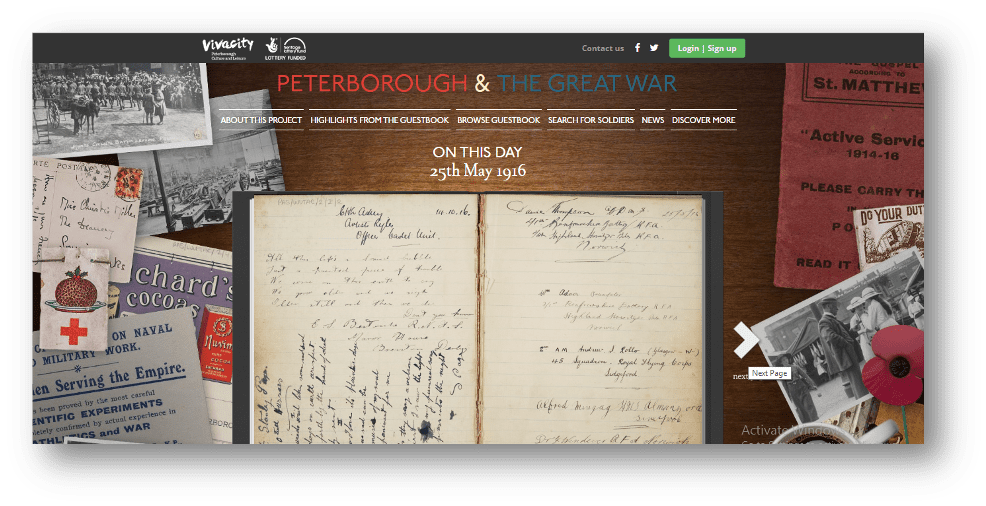
We used WordPress to create a website for Vivacity, the cultural service in Peterborough, bringing to life the city’s role in World War I. Thousands of soldiers, signed a guestbook as they passed through Peterborough en-route to the front line. Our role was to create digital version of the guestbook showcasing the servicemen’s entries page by page.

The content of the book was digitised by a group of volunteers. We used JavaScript to create a page-turning function. HTML and technical bespoke coding created a virtual book with clickable areas on each page.

Our client loved the site and it attracted national attention as part of World War I centenary celebrations.

  • Teach Peterborough

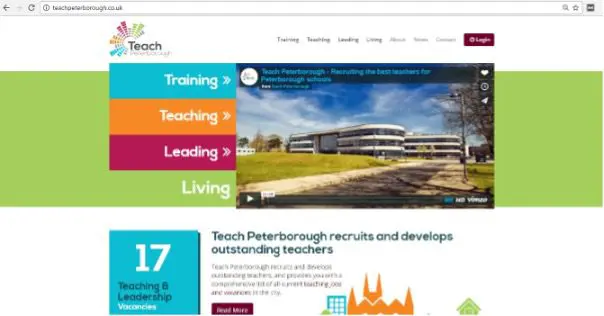
Our client needed a website that promoted Peterborough to teachers as a great place to live and develop their careers. Using WordPress, Speed created a digitally designed website that centred on recruitment.

Speed’s in-depth knowledge of WordPress meant that we were able to make Teach Peterborough a very user friendly website, that enables potential applicants to find the placement they wanted, quickly and easily. Applying for a jobs is generally a long and complicated process, but we made it easier. With Teach Peterborough candidates fill in a form once then submit their details to multiple vacancies.

The website acts as a portal which brings everything teachers need together in one place. It successfully drew more teachers into the area. Teach Peterborough also won regional campaign of the year at the CIPR awards. 

Fintech And Improving Customer Experience

Fintech is big business around the world. Financial technology is a growing area of expertise for Speed too, particularly in financial services website development and the marketing of financial services. The main priority for most Fintech initiatives is to improve customer experience.

The UK has become a global hub for this activity, and London is home to more than 2,000 fintech companies. Jobs in fintech have grown by 61%.

The speed of change is lightning fast. The first consumer banking app was only launched in 2011, yet today every bank has an app and ‘digital-only’ banks with no branches have hit the mainstream. More than a quarter of the UK population now have an account with a digital bank and 54% of UK adults use mobile banking apps.

Online innovations to boost customer experience

Starling, Monzo and Atom Bank are well established digital-only brands that frequently win customer experience awards. These banks use clever techniques to engage with their audience – for example by allowing consumers to personalise the entire experience. ANNA bank even decided to produce a debit card that miaows.

However, traditional financial providers are fighting back and investing heavily in their technology to make sure they can keep up with the challenger brands. Money Saving Expert compares different apps from digital and traditional players, and has found that apps from Barclays and Lloyds are rated well by customers for useability and features.

Top priorities for Fintech

Making payment easy

Fintech delivers faster, easier payments for people and businesses. Debit cards make it easy to buy online, and 64% of people have used online payments such as PayPal, Apple Pay and Google Pay in the past 12 months.

Online Security

With high-profile banking security breaches in recent years, keeping customers’ digital identity secure is one of the main challenges. However, Fintech are pioneering new approaches to verify and manage identity. Facial and biometric authentication are already becoming the norm in consumer banking apps.

Reducing costs

Many Fintech innovations focus on making services more accessible. Not only can customers manage their money and access special tools from the tap of their mobile or tablet, Fintech makes services more affordable by lowering costs. Removing the need for high street branches is a major saving that can be passed on to the consumer.

Marketing Trends In Finance 2022

The marketing efforts of any financial organisations have always focused on two goals: to raise brand awareness and engage customers in their financial services. We have many financial services marketing clients that seek our support in achieving these goals.   

The finance sector is one of the most fast-moving industries we specialise in. Here are some of the key trends of the moment…

Consistent customer experience

Financial services marketing is more complex than ever. Customers can interact with your brand via many channels – your website, in person, via an app, with your email communications, printed collateral and advertising.

Keeping your brand messages, tone and visual identity the same across all channels is challenging, but it’s crucial in reassuring your customer of your reliability and trustworthiness.

Acting responsibly

The tide is turning on sustainability and companies big and small need to demonstrate that they have an ethical approach to business. 77% of consumers are now more motivated to buy from a company that has a clear Corporate Social Responsibility pledge.

In addition, new sustainable finance rules are coming in from regulators. All financial organisations need to make sure that they have clear policies around investments, carbon reduction, environmental impact and community involvement.

Security and fraud support

Security breaches, hacking and ransomware are very real threats to financial services brands. Not only must you invest in defences against these risks, but you must also reassure customers that their data is safe.

Similarly, customers need constant education and reminders of the risk of fraud, as scammers develop ever-more convincing ways to target people.  The way you handle customers who have been exposed to fraud is also challenging. A perceived lack of support could have serious impact on your reputation.

The financial sector is ever changing – which is one of the reasons that the marketing of financial services is such a fascinating part of the work we do.